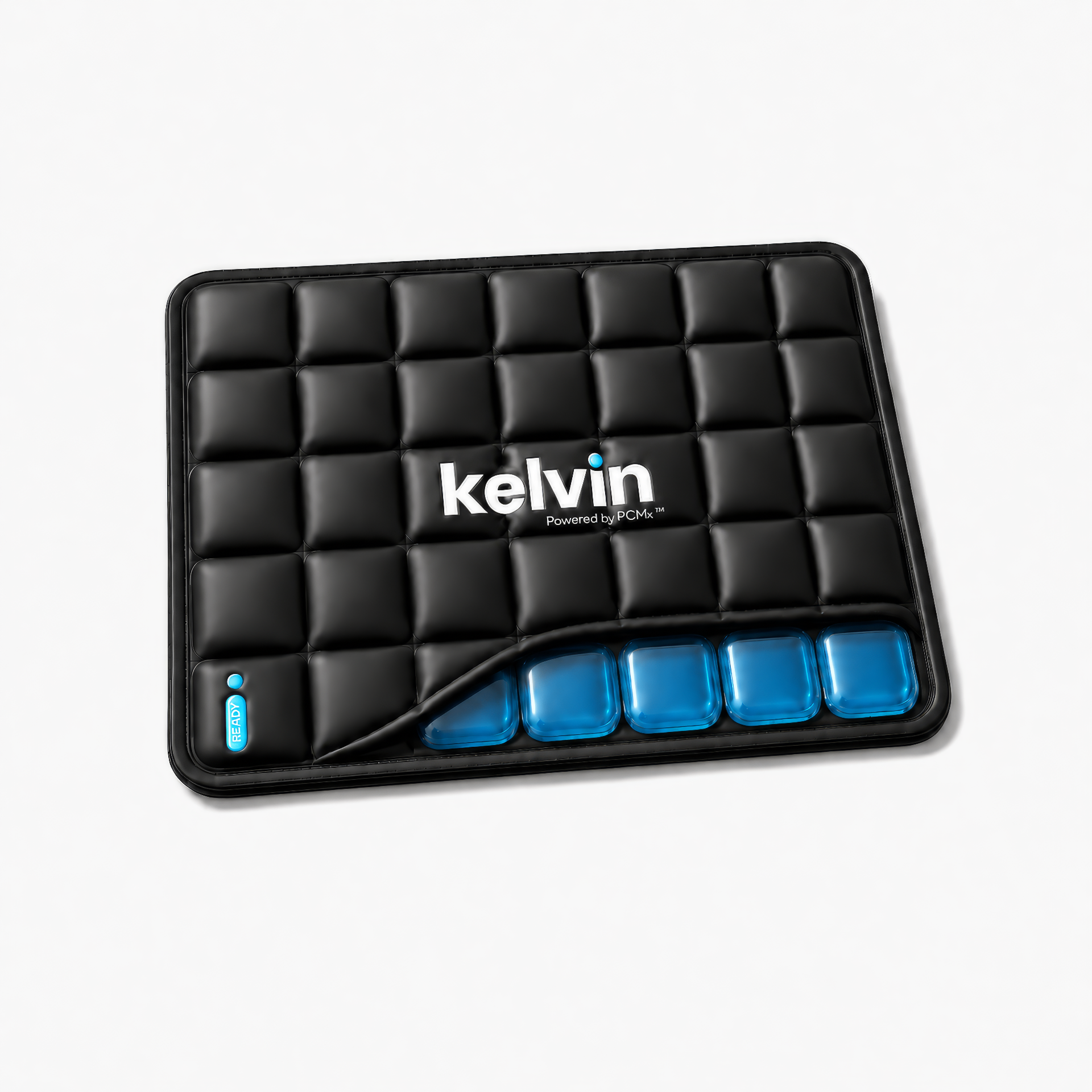
Ice packs start too cold. Kelvin sits in the 10 to 12°C window, and stays there.

Independent thermal testing is underway. Measured figures will be published here when it is complete.

Cold, held steady.

A reusable, fridge-ready cold-therapy pad that holds a gentle, controlled 10 to 12°C, the range used for cold therapy, instead of the 0°C shock of ice. It never freezes solid and never goes sub-zero. Dry, steady, and reusable.

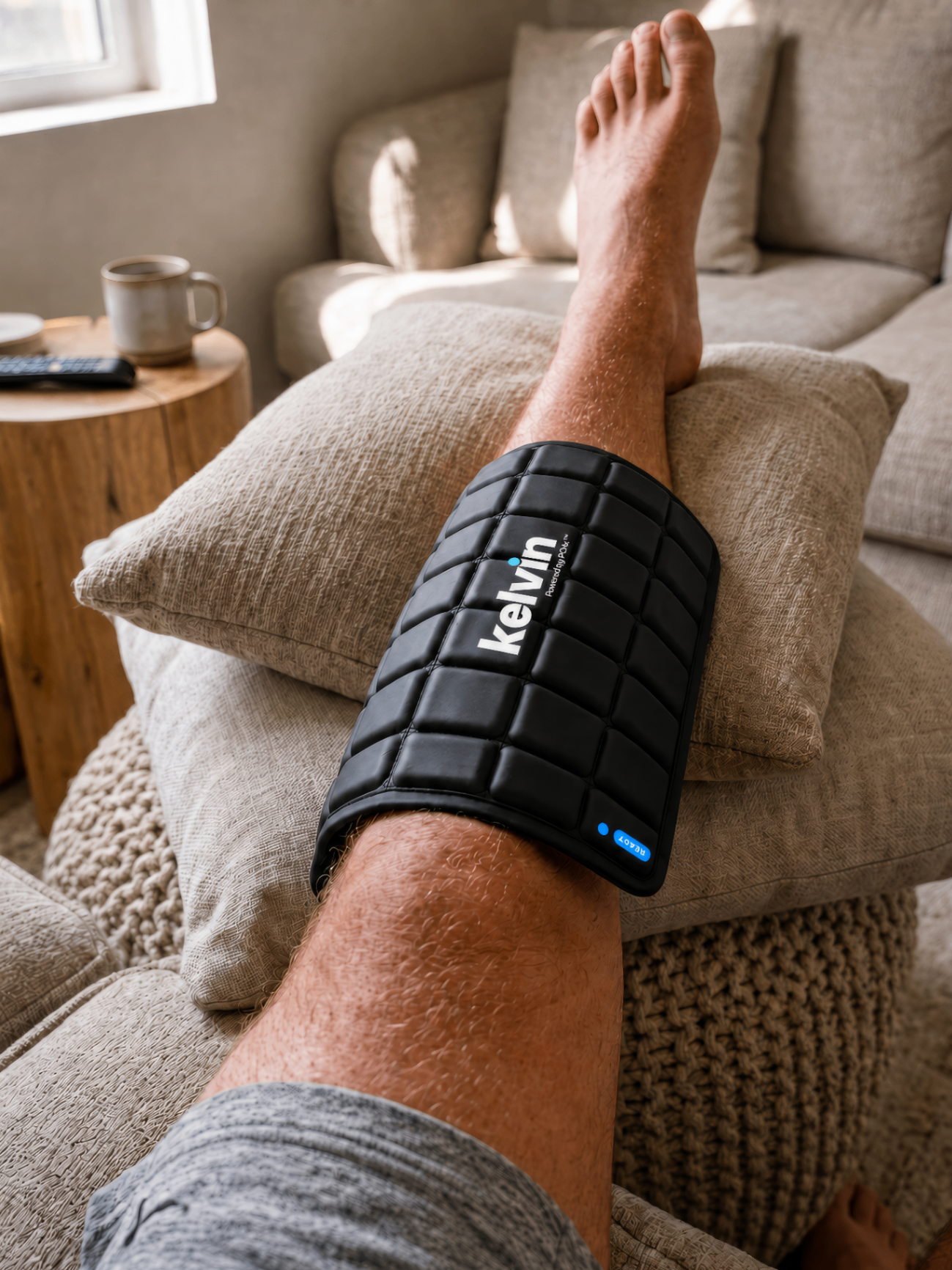
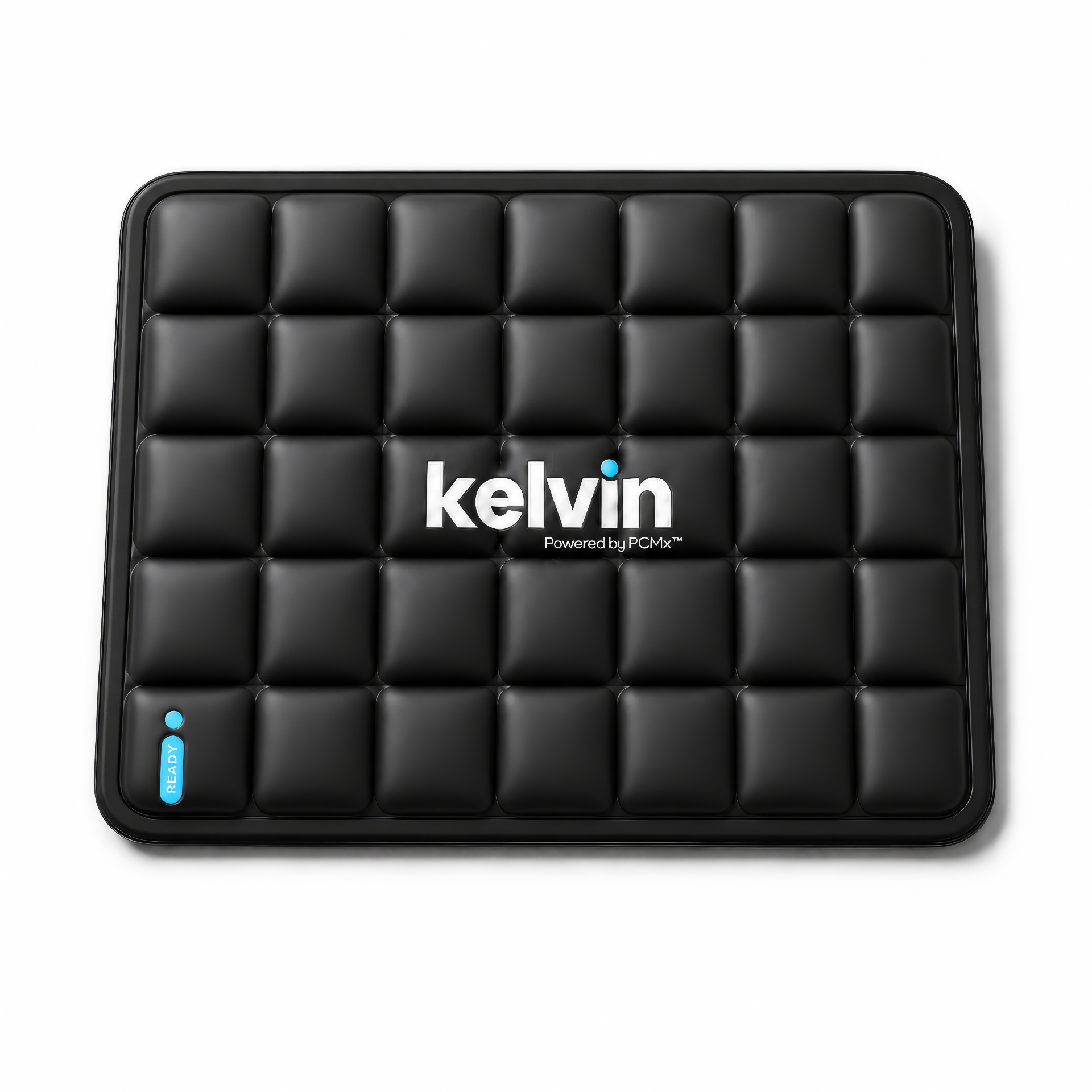
Kelvin™ cold therapy compress - quilted black sport-grade flex-shell, photographed on warm linen
  • Steady 10 to 12°C
  • Never sub-zero
  • Dry, no drip
Prep
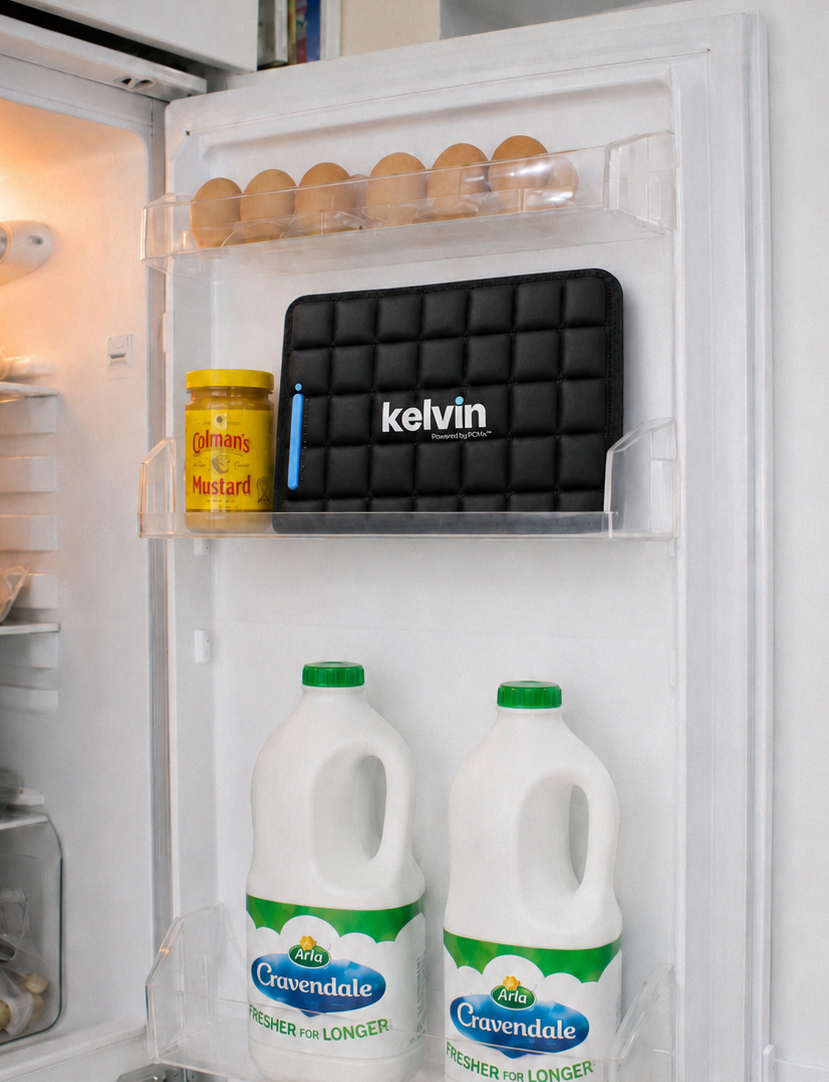
Charge it in your fridge
Overnight is easiest. The badge shows when it is ready.
Apply
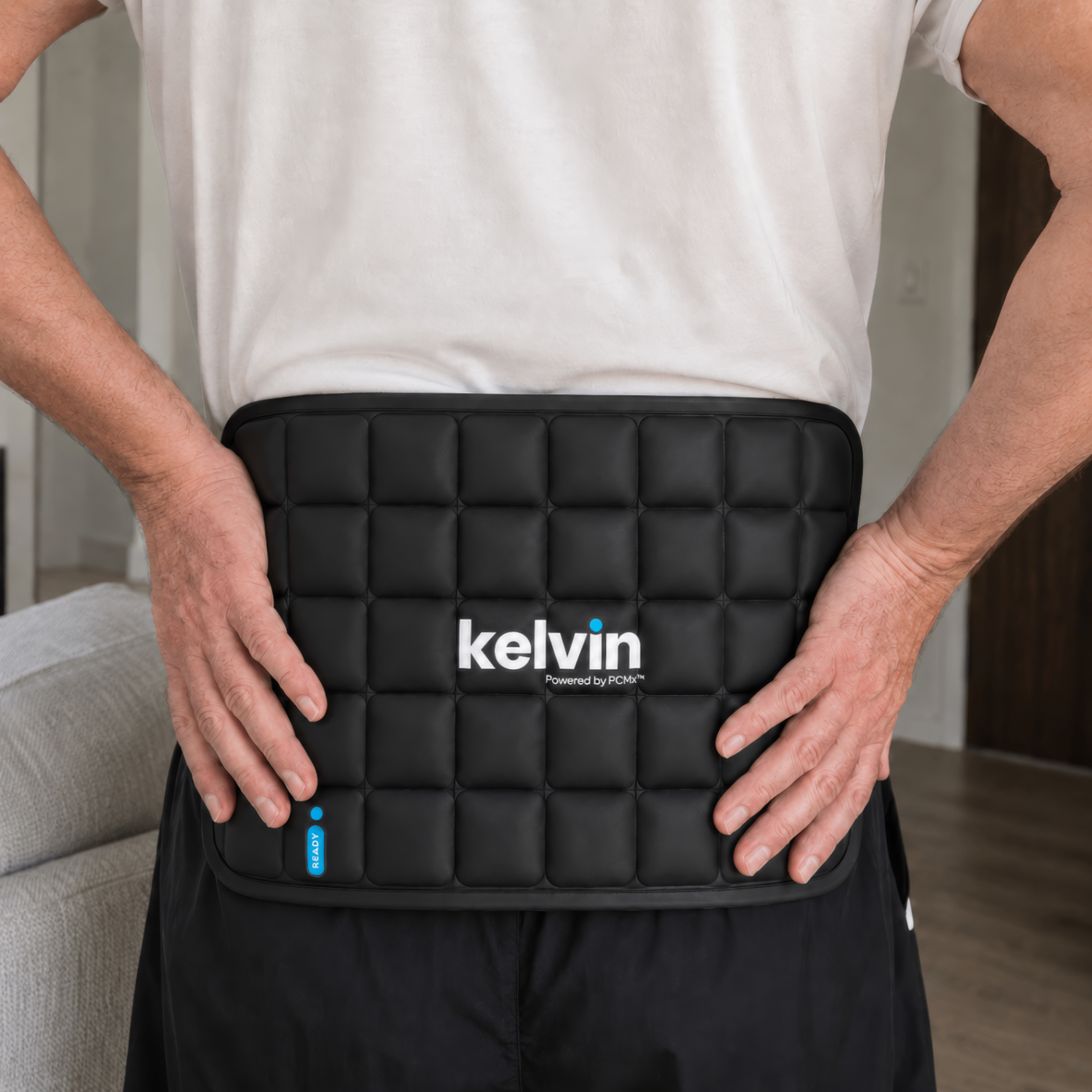
Strap it in place
Use firm, normal pressure on a knee, elbow or lower back.
Reuse
Steady 10 to 12°C
Use it for a full cold-therapy session, then recharge.
The system
01The principle · PCMx™ inside

Latent-heat physics. Held at 10 to 12°C.

PCMx™ is a phase-change material. It absorbs heat by changing state rather than simply warming up, helping Kelvin hold a gentle, controlled temperature through a full cold-therapy session.
02 Fridge charged

Fridge charge, ready overnight.

Kelvin never goes sub-zero, so it is designed to avoid the ice-burn and cold-shock of a frozen pack. The sewn-edge indicator badge shows when it is ready.

Macro view of translucent PCMx phase-change pods sealed inside Kelvin™
PCMx™ pods · macro
03 Built once

Zero single-use waste.

Hand-finished sport-grade flex-shell, sealed PCMx™ pods and a sewn-edge indicator badge. Designed in the UK for repeated use.

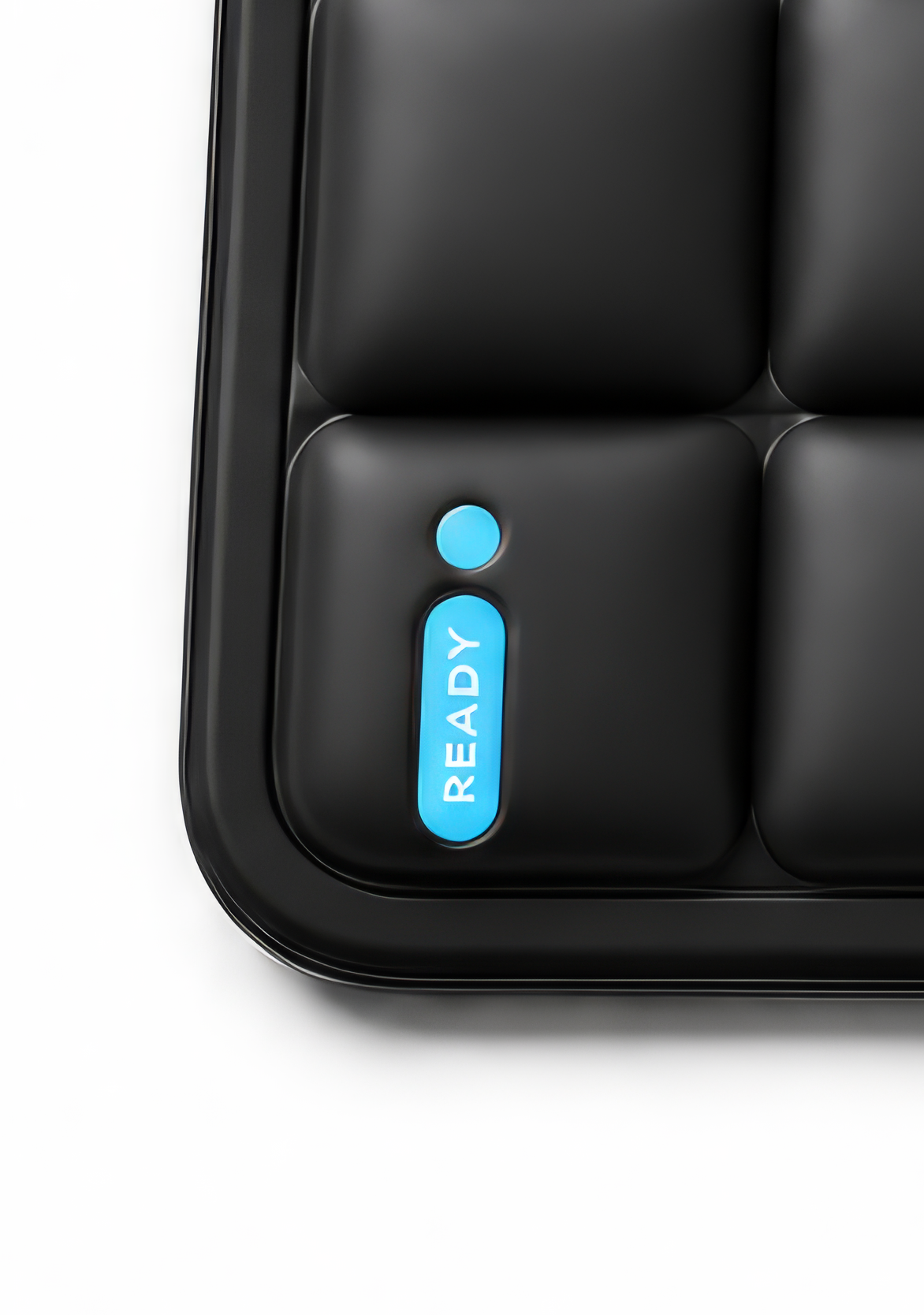
Macro close-up of the sewn-edge thermochromic indicator badge on Kelvin™, fading from white to ice blue
04 Always know

The badge tells you when it is ready.

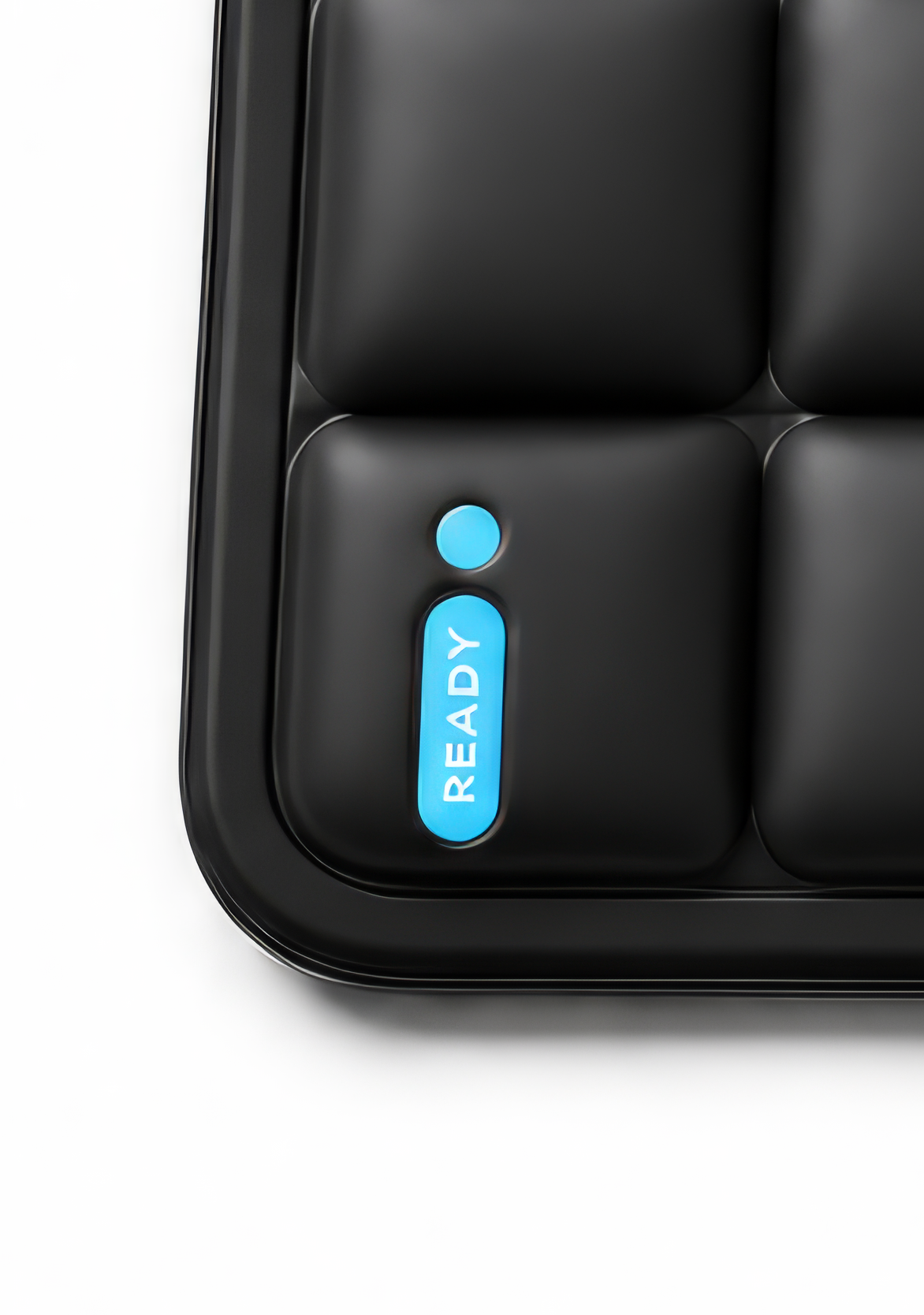
Ice blue when ready. Fades to white when it is time to recharge.

Detail of the sewn-edge thermochromic indicator badge on Kelvin™
Considered detail

Bare-shell.
Direct cold transfer.

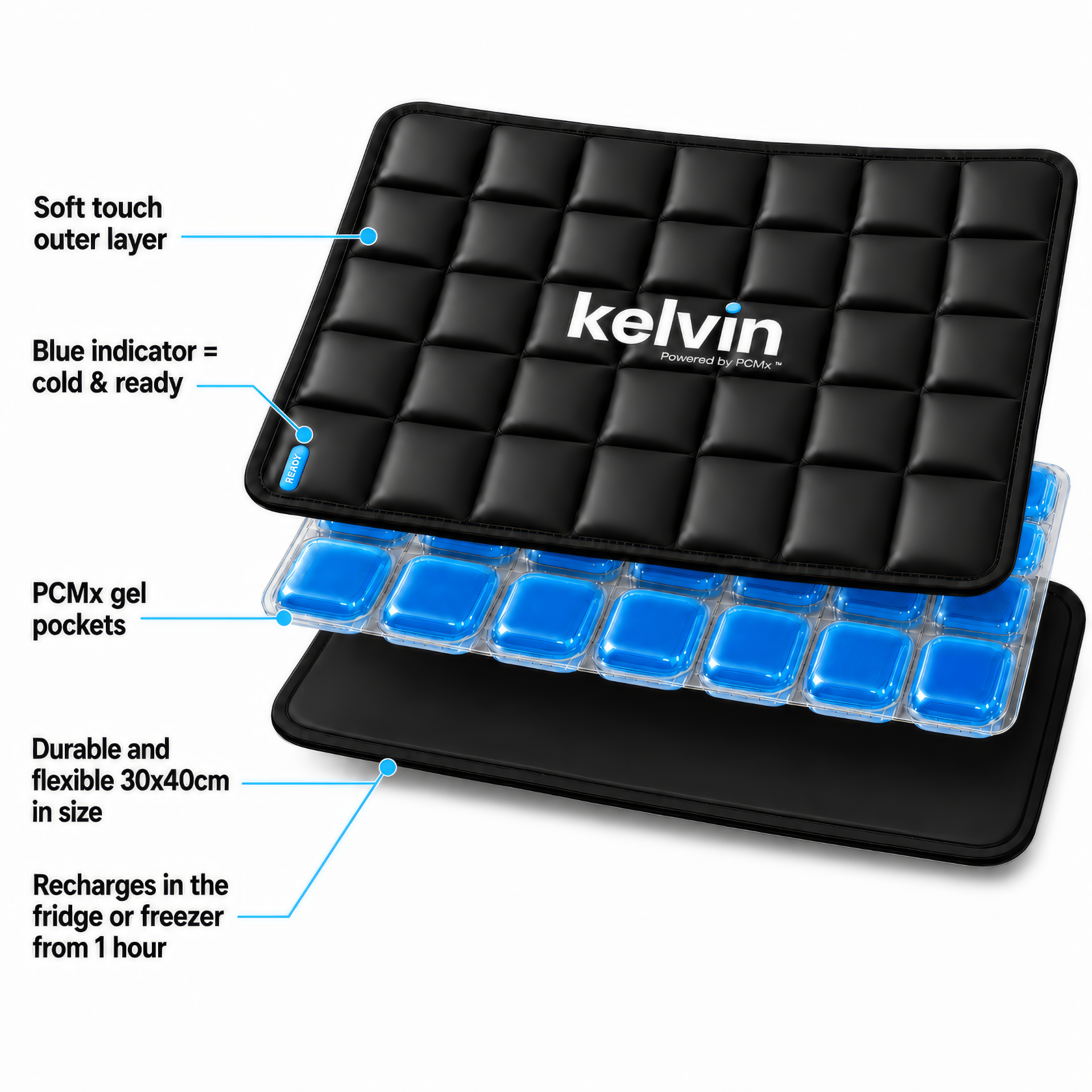
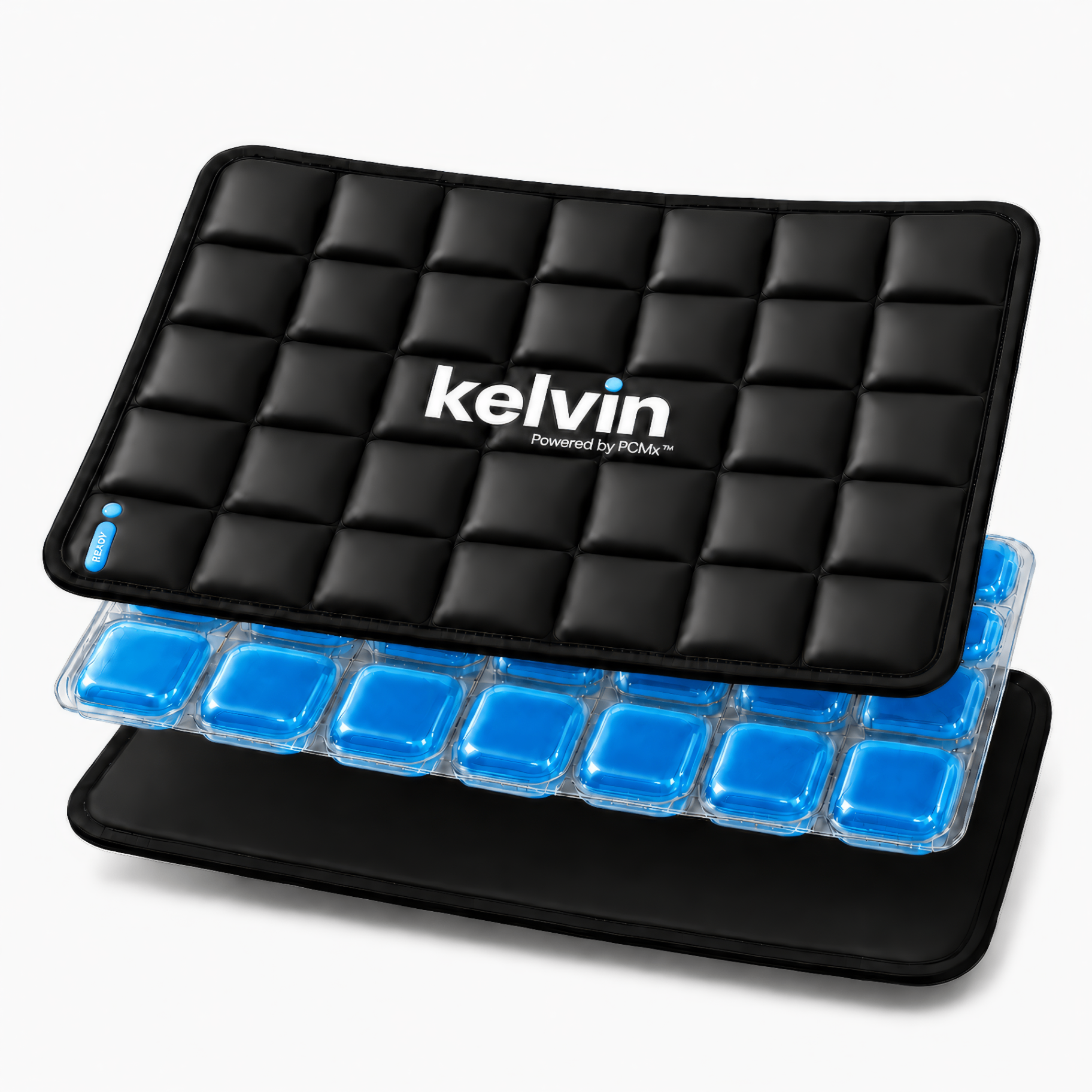
No fabric, no fleece, no insulating layers between you and the cold. A matte black sport-grade flex-shell holds thirty-five heat-welded PCMx™ pods in a 7 x 5 grid that bends with the body, with a thermochromic readiness badge sewn into the pad edge.

PCM mass
400 g · phase point 10 to 12°C
Dimensions
30 x 40 cm · 7 x 5 pod grid (35 pods)
Phase point
10 to 12°C (PCMx™)
Outer
Matte black sport-grade flex-shell
Construction
Heat-welded TPU pod grid, sewn-edge readiness badge
Recharge
Fridge charge, ready overnight
Who Kelvin is for

Built for the bodies
that keep moving.

For active days, training sessions and everyday routines, Kelvin provides gentle, controlled cooling that fits around the body.

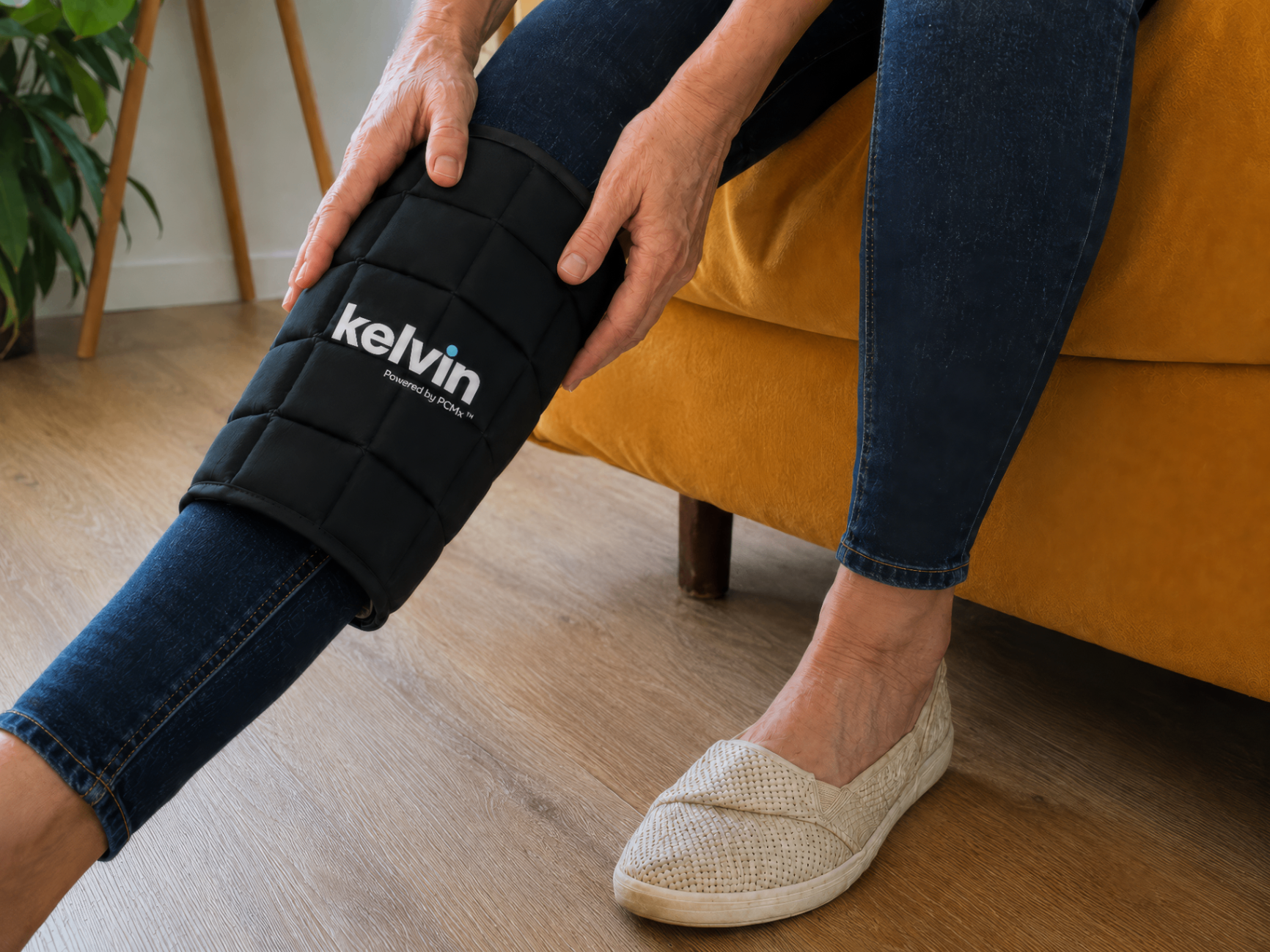
Hands resting on a sore knee
Everyday

Knees & joints

Controlled cooling comfort for knees and joints after long days, workouts or everyday activity.

Everyday

Lower back

Fridge-ready cooling for lower back comfort while resting, sitting or winding down.

Amateur sport

Tennis elbow

Flexible cooling that sits comfortably over the joint and can be recharged for another session.

Recovery

Everyday knocks & tweaks

Keep Kelvin in the fridge so controlled cooling is ready when you need it.

Amateur sport

Shoulders

Sits over the shoulder for steady cooling after tennis, golf, swimming or a gym session.

Amateur sport

After training

Steady cooling after runs, training or gym sessions, without the freezing shock of a frozen pack.

Amateur runner resting on a bench after a run

Kelvin is intended for general cooling comfort. It is not a medical device or a substitute for medical advice. Always follow the instructions for use.

Shop now - £39Free UK shipping · 30-day returns
How it works

Chill. Apply. Recharge.

  1. Chill
    01

    Chill

    Charge Kelvin™ in your fridge. Overnight is easiest. The readiness badge tells you when it is set.

  2. Apply
    02

    Apply

    Strap it to a knee, elbow or lower back with firm, normal pressure.

  3. Recharge
    03

    Recharge

    It holds a gentle, controlled 10 to 12°C for a full cold-therapy session, then you recharge and reuse it. It is not designed to be sat or lain on, which drains it faster.

Why not an ice pack?

Kelvin vs ice packs.

An ordinary ice or gel pack comes out of the freezer at 0°C or below. That is too cold at the start, it carries an ice-burn risk, and it can trigger the body's cold rebound. As it thaws, it passes through the useful range and keeps warming. It also sweats and drips.

Kelvin begins in the cold-therapy window and holds a gentle 10 to 12°C as it slowly warms. It never goes sub-zero, so it is designed to avoid ice-burn and cold shock. Because nothing melts, it stays dry.

Feature
Recommended
Kelvin
Alternative
Ice / Gel
Application temperature
10 to 12°C
0°C or below
Cold-therapy range from first contact
Yes
No
Ice burn risk
Designed to avoid ice burn when used as directed
Can cause ice burn on direct skin contact
Through a full session
Steady in range
Warms through the range
Recharge
Fridge, ready overnight
Freezer required
Fits the body
Flexible, 30 x 40 cm
Often rigid

It is about where the temperature sits, not how cold it feels at first.

Kelvin pad with callouts showing its readiness badge and flexible pod grid

"Standard ice packs shouldn't touch your skin directly."

- Johns Hopkins Medicine

Because they can be sub-zero. Kelvin never goes sub-zero, so it is designed to avoid the ice-burn and cold-shock of a frozen pack when used as directed.

Ready for controlled cooling?

One Kelvin™. Ready when you are. £39.

Shop now - £39
The science has moved on

Cold therapy
has a useful
temperature range.

Cold therapy works by cooling the skin into roughly the 10 to 15°C range, which slows local nerve signalling. In one study, cooling the skin to about 10°C reduced nerve conduction velocity by about a third.

Go colder and there are diminishing returns and rising risks, including ice-burn and the cold rebound first described by Lewis in 1930. Colder is not always better.

0C5C10C15C20C25CSTART1/4MID3/4ENDSESSION PROGRESSCOLD-THERAPY WINDOW · 10-15°CICE PACK WARMS THROUGHStarts too cold, then passes through the rangeKELVIN SETTLES IN RANGEIndependent thermal testing is underway
Kelvin Standard ice / gel pack
Fig. 01 · Illustrative temperature profile
From the evidence

Algafly & George, peer-reviewed in the British Journal of Sports Medicine, 2007.

"Cooling skin to about 10°C reduced nerve conduction velocity by about a third."

The benefit comes from holding the useful temperature window. A melting ice pack cannot hold one temperature, while Kelvin is designed to settle into a gentle 10 to 12°C as it slowly warms.

  • About 1/3

    Reduction in nerve conduction velocity at about 10°C in Algafly and George (2007).

  • 10 to 15°C

    The approximate skin-temperature range used for cold therapy.

  • 0°C

    Where frozen gel and ice packs may start, before warming through the useful range.

This published research is not a claim about Kelvin™'s own performance. Independent thermal testing is underway; results will be published here.
Algafly AA, George KP. Br J Sports Med. 2007;41(6):365-369. PMC2465313 →
Nerve-palsy case series: PMID 1443317 → · Systematic review: PMID 14754753 →
Kelvin™ cold compress, open showing PCMx pods
Exploded view of Kelvin™ showing pod tray and quilted sleeves
Sewn-edge thermochromic indicator badge detail
Kelvin™ in use on a knee
FAQ

Questions, answered.

How is Kelvin™ different from a normal gel pack?+

Gel and ice packs can come out of the freezer at 0°C or below, then warm through the useful range. Kelvin™ uses PCMx™, a phase-change material, to hold a gentle, controlled 10 to 12°C as it slowly warms.

Do I need a freezer?+

No. Charge Kelvin™ in your fridge; overnight is easiest. The sewn-edge readiness badge shows when it is set.

Can I put it directly on my skin?+

It never goes sub-zero, so it will not ice-burn the way a frozen pack can. Use it as directed.

Who should not use Kelvin™?+

Kelvin™ is intended for external cooling on intact skin. Do not use if you have reduced skin sensation, poor circulation, cold sensitivity, nerve damage, or if a clinician has advised you to avoid cold exposure. Speak to a healthcare professional if unsure.

Can I sleep with Kelvin™?+

Kelvin™ is designed for supervised cooling sessions while resting or sitting. Do not use while asleep.

How long does each use last?+

It holds the cold-therapy range for a full session. We are having the exact figure measured by an independent laboratory and will publish it here.

Won't it give me ice burn like a frozen gel pack?+

Kelvin™ never goes sub-zero, so it is designed to avoid the ice-burn and cold-shock of a frozen pack. Use it as directed.

How do I know it's actually at the right temperature?+

A sewn-edge thermochromic readiness badge integrated into the pad edge shows when Kelvin™ is ready, then fades when it needs to recharge.

Does it leak or sweat onto my skin and furniture?+

Nothing melts, so there is no dripping or meltwater. The sport-grade flex-shell outer wipes clean and contains thirty-five sealed PCMx™ pods.

Will it fit a curved joint like a knee or shoulder?+

Yes. The pods are arranged in a 7 x 5 grid so the pad forms around knees, shoulders, ankles and the lower back without rigid edges.

Can I use it more than once a day?+

Yes. Recharge it in the fridge after use. The badge shows when it is ready for another session.

What's the return policy?+

30 days, no questions asked. If Kelvin™ isn't for you, send it back for a full refund.

Kelvin™

Cold therapy held at the temperature the evidence actually points to. Designed in the UK. Made for the fridge.

Support
hello@shopkelvin.com
0800 772 3970
Mon-Fri, 9-5 GMT
Kelvin is operated by Kelvin Technologies Ltd. Registered in England & Wales No. 17338271. 66 Paul Street, London, EC2A 4NA
© 2026 Kelvin Technologies Ltd.